It’s a few years old now, so you can get it refurbished for fairly cheap.
We may receive a commission on purchases made from links.
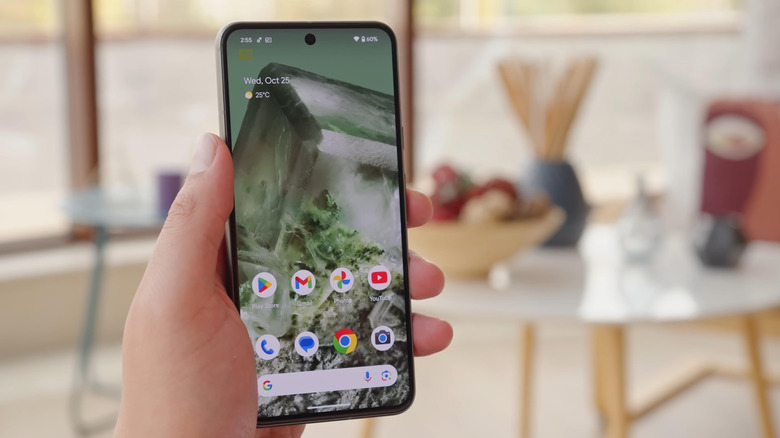
There are a handful of budget-friendly Android phones worth considering if you’re not too concerned about having the best camera system or the fastest processor. Buying higher-end phones from a year or two ago, though, can often get you a better overall experience. Google’s Pixel series can be an interesting place to look if you value a clean user interface, solid cameras and long-term software support. Launched in 2023 at $700, the Pixel 8 can currently be had for under $300 on Amazon — albeit in refurbished condition.
It’s a pretty good deal, considering the latest budget entry from Google, the Pixel 10a, starts at $500. Whether the Pixel 8 is still worth it in 2026, though, depends on what you’re looking for in a phone. The phone can be updated to Android 17 and was launched with the promise of receiving seven years of OS and security updates. This means you’ll continue to receive Android updates on the Pixel 8 at least until 2030. The phone’s hardware and battery health are far more likely to give out before you run into app compatibility issues.
It features a 6.2-inch, 120Hz OLED display with a peak brightness of 2,000 nits. Bezels are decently thin, and the camera visor gives it the same unmistakable Pixel look that Google continues to use in its latest devices. It offers a dual-camera setup, with 50-megapixel wide and 12-megapixel ultrawide shooters. AI in smartphones is something Google is doing noticeably better than others, and you see it a lot in the Pixel 8’s camera suite with features like Magic Editor and Best Take. We were overall impressed with the camera performance of the Pixel 8 and Pixel 8 Pro, both of which share the same primary sensor.
What about performance?
Pixels are some of the easiest phones to recommend to those looking for the quintessential Android experience, but we wouldn’t suggest them to hardcore gamers. In fact, we wouldn’t even recommend the latest Pixel 11 series if raw performance is what you’re after. Google’s in-house Tensor chips have been understandably criticized over the years for consistently delivering performance that trails similarly priced phones powered by Qualcomm’s or Apple’s SoCs.
The Tensor G3 that powers the Pixel 8 is all right for casual games and can handle a few demanding titles, but it lacks the graphical horsepower to deliver smooth frame rates at higher settings. You might not care about the gaming prowess of a Snapdragon chip, but years down the line, that raw performance could mean the difference between a phone that’s still very snappy with day-to-day operations and one that’s beginning to show its age.
Quite a few Pixel 8 users have complained of choppy animations, long app launch times and overall poor system responsiveness as the device has gotten older. Battery life is also not the Pixel’s strongest suit. With every new Pixel launch, it seems to be only a matter of time before reports of poor battery life start piling up.
You get a 4,575 mAh battery with the Pixel 8 that supports up to 27W charging. You also get wireless charging at up to 18W. None of these numbers are exciting, and you’d be better off eyeing other Android devices if battery life and performance are high on your list of priorities.
Where the Pixel 8 shines
The Pixel 8 may not be the fastest phone, but it beats most similarly priced alternatives in camera performance. Most people view Pixel UI’s minimal and mostly bloat-free Android experience as one of its biggest plus points, so you’ll likely be happy with the software experience. Besides timely OS updates, Google ships what it calls “Pixel Drops” to its devices. These are essentially feature updates that bring exciting new quality-of-life goodies like Screen Reactions and Bubbles. Not every new Pixel feature is ported to older devices, but with the Pixel 8 still being relatively new, you can expect it to receive a decent chunk of what Google showcases.
Another thing to like about the Pixel 8 is its design and build quality. Unlike most phones in this price range, you’re getting a proper flagship build with an aluminum frame and glass back. There’s an IP68 dust- and water-resistance rating to go along with it. Plus, reverse wireless charging lets you top up smaller accessories like wireless earbuds on the go.
That said, if you can snag a Pixel 9 for a little extra, you’d be upgrading to a 48-megapixel ultrawide camera, 12GB of RAM and the Tensor G4, which should age a little better. Even the Pixel 9a could be a better pick since it uses the same silicon as the Pixel 9 and enjoys an extra year of OS updates. It comes with a similar camera system, though it switches the Pixel 8’s glass back for a plastic one. Amazon Renewed has the Pixel 9a listed at around $330 and the Pixel 9 at $420.